
The Making of a New Humanity
The Old AxolotlThis flow follows the practical and political work of rebuilding organic life, then asks whether biology alone can restore human inheritance.
increasing Bearing strength in each event
 decreasing
Bearing strength in each eventdecreasingThe Proposal
The Proposal
A reversal of roles
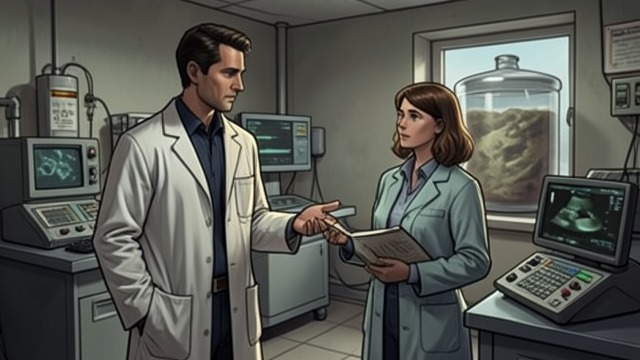
Frances Rory proposes using preserved genetic knowledge and laboratory machinery to create a human being. Transformers who once depended on human civilization would become its makers.
An immense undertaking
Bartek doubts that a person could survive without the surrounding ecology of microbes, food, and other organisms. Frances accepts the scale of the problem and asks him to join the work.
The proposal gives the survivors a goal beyond maintaining machines, while opening a new dispute over what should be restored.
Rebuilding the Living World
Rebuilding the Living World
From sequence to organism
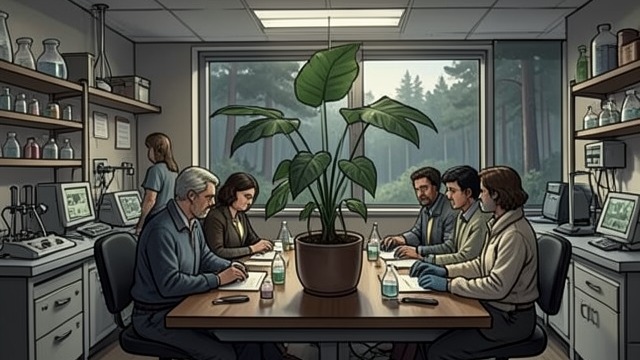
Vincent Cho leads the difficult work of turning archived biological knowledge into living organisms. The project must reconstruct development as well as genetic material, and unexpected results continually disrupt plans.
A new ecology
Animals, plants, and microbial life spread through the laboratory landscape. The work creates real biological possibilities, but it also introduces failures and environmental effects that transformers cannot simply reverse.
Life returns through engineering, yet its return is neither neat nor fully controlled.
The First Children
The First Children
A new generation
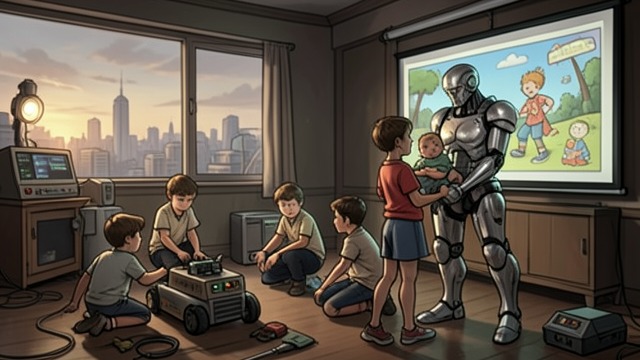
Indy and the other children of the first litter grow up among machines, archived culture, and transformer caregivers. Their childhood is real, but its cultural surroundings differ radically from those of the lost world.
Questions of inheritance
Bartek wonders whether children raised through cartoons and technological systems can inherit the old human culture, or whether they will create a distinct one. Their lives make the project’s abstract questions immediate.
The children are not merely evidence of successful synthesis; they are the beginning of an unpredictable society.
The Problem of Epigenesis
The Problem of Epigenesis
Beyond the genome
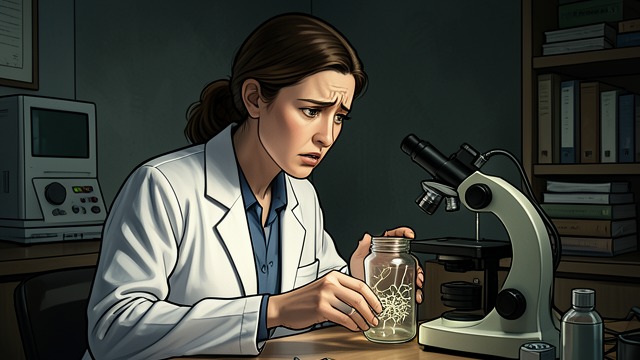
Jarlinka explains that identical genetic material can develop differently because inherited conditions shape gene expression. Preserved DNA cannot, by itself, reproduce the whole history that formed an organism.
Culture as inheritance
Bartek recognizes that childhood, care, and shared practices may shape the new humans as profoundly as genetic sequences. Their upbringing becomes part of the biological experiment, whether the transformers intend that or not.
This problem shifts the project from producing bodies to taking responsibility for a culture.
Humanity Beyond the Founders
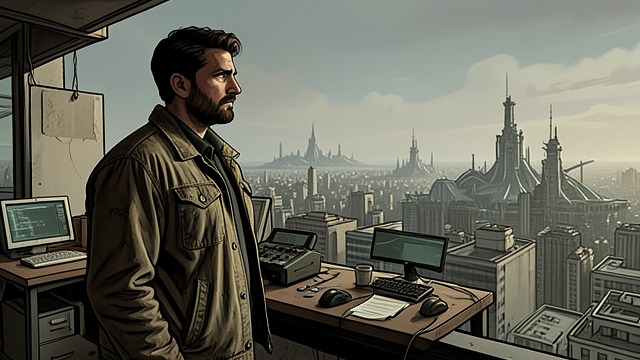
Humanity Beyond the Founders
A wider experiment
Bartek secretly considers leaving the project and helping another group begin life anew. He hopes a different upbringing could avoid the unplanned traditions already taking root around the first generations.
No clean beginning
He knows that every new project would carry its own assumptions and failures. The founders of the original world had not planned its entire history either; its apparent origin also followed countless unsuccessful beginnings.
The attempt to choose a better humanity becomes a recognition that no creator can fully control what follows.
Early in Bartek’s Tokyo years
The early decades of Project Genesis
Around 4,882 PostApoc
After the first litters begin to grow
Near 10K PostApoc
